
Where Arizona Phone Numbers Are Published
Think in layers. The state layer is AZ Direct, the official directory of Arizona agencies and employees. The county layer is each county's .gov staff directory. The city layer is each city's contact page, with Phoenix adding a downloadable citywide phone book in English and Spanish. Schools, universities, utilities, courts, and hospitals each publish separately. The number you need is almost always in one of these, and the trick is picking the right layer instead of searching the open web.
When a directory fails, fall back in order. Call the office's main switchboard and ask to be transferred. Visit the counter in person if the office has one. For numbers that were never published, a request under Arizona's public records law to the holding agency is the formal route, and for community services with no obvious office at all, dialing 211 finds the right program by need rather than by name.
Arizona Government Staff Directories
Arizona's state directory at AZ Direct covers agencies, boards, commissions, subdivisions, executive staff, and state employees. A typical agency record carries a predictable set of fields.
| Field | What It Shows |
|---|---|
| Agency name | The Arizona department, board, or commission |
| Address | Street, suite or floor, city, and ZIP |
| Main phone | The agency-level line, where published |
| Named contacts | Executive or staff contact with title and direct phone |
| Subdivisions | Divisions and program units under the agency |
| Redactions | Personal numbers are excluded; only public office lines appear |
At the county layer, the Maricopa County staff directory is the deepest example in Arizona. Its search form is short but its category menu is enormous, reaching offices most residents never knew had their own line.
| Field | Type | Required | Notes / Format |
|---|---|---|---|
| Category | Dropdown | No | Assessor, Board of Supervisors, Elections, Public Health, Recorder, Sheriff, Superior Court, Treasurer, Air Quality, Burn Day Status, and dozens more |
| First Name | Text | No | Up to 30 characters |
| Last Name | Text | No | Up to 30 characters |
| Search | Submit button | N/A | Returns category and telephone; some entries add address, email, hours, and staff rows |
City directories vary more. Phoenix keeps its main line at 602-262-3111 with TTY at 711, and its published directory is a citywide download rather than a search form. Messages sent through Phoenix contact forms become public record under Arizona law, a warning the city posts on its own contact page.
Emergency Lines and Crisis Numbers
Keep the big three-digit codes separate in your head. Danger means 911. A mental health crisis means 988, with veterans pressing 1. Everyday help finding services means 211. Arizona layers its own hotlines on top of the national set, and the Department of Public Safety runs the administrative side of Arizona state policing from its contact center.
911 - emergencies, fire, crimes in progress. Text-to-911 exists where local dispatch supports it, meant for callers who cannot safely speak.
988 - Suicide and Crisis Lifeline by call, text, or chat, around the clock.
1-844-534-4673 - Arizona's statewide crisis hotline, with text support at 44673.
211 - statewide community services and referrals.
Poison Control - 1-800-222-1222.
DPS publishes direct lines for its public services, which saves a trip through the main menu.
- DPS main and non-emergency - 602-223-2000
- DPS records - 602-223-2000, option 2
- Fingerprinting - 602-223-5005, and clearance cards at 602-223-2279
- Concealed weapons permits - 602-256-6280, or 800-256-6280 outside metro Phoenix
- District offices - Flagstaff 928-773-3623, Kingman 928-753-5552, Yuma 928-782-1679
- Teen Lifeline - 602-248-8336 in Maricopa County, 1-800-248-8336 elsewhere
- Be Connected veterans line - 1-866-429-8387
Recordings of 911 calls are not ordered through 911 itself. The Arizona 9-1-1 Program directs those requests to the jurisdiction where the incident happened, usually the local police or sheriff records unit.
Directories for Arizona Schools and Campuses
Education numbers live at three depths. The Arizona Department of Education lists its own units A to Z. Districts publish main lines and department pages, with the larger ones running searchable staff directories. The universities publish the deepest lists, though with different access rules at each campus.
Phoenix Union High School District
4502 N. Central Avenue
Phoenix, AZ 85012
602-764-1100
Access differs by campus. ASU's iSearch stays public, and college pages list name, title, email, phone, and office for published staff. The University of Arizona splits its system: the organization directory and general numbers are open, but person-by-person phonebook search now requires a NetID login. Useful UArizona direct lines include campus police at 520-621-8273, admissions at 520-621-3237, the registrar at 520-621-3113, and campus health at 520-621-9202. Mesa Public Schools runs a public staff search reachable from its main line at 480-472-0200.
Note: No public phonebook lists every Arizona teacher's direct line, so the campus front office remains the standard route to any individual educator.
Utility Phone Numbers for Arizona Customers
Every Arizona utility runs at least two lines, and calling the wrong one slows everything down. Outages and emergencies get priority queues. Billing questions go to customer service. For a gas smell, leave the building before calling anyone, then reach Southwest Gas or 911 from a safe distance.
| Utility | Emergency / Outage | Customer Service |
|---|---|---|
| Arizona Public Service | 602-371-3680 / 855-688-2437 | 602-371-7171 / 800-253-9405 |
| Salt River Project | Published outage line | 602-236-8888 |
| Tucson Electric Power | 520-623-7711 | 520-623-7711, weekdays 7 a.m. to 6 p.m. |
| Southwest Gas | 877-860-6020, plus 911 for leaks | 877-860-6020 |
| EPCOR water/wastewater | 911 for immediate danger | 800-383-0834 |
| Phoenix city services billing | N/A | 602-262-6251 |
| Arizona 811 utility locates | Dial 811 at least two working days before digging | |
Complaints about a regulated Arizona utility start with the utility itself. If that fails, the Corporation Commission's Utilities Division takes the case at 602-542-4251 or 1-800-222-7000 in state.
Arizona Health and Benefit Phone Numbers
The Department of Economic Security posts one program phone list on des.az.gov that covers most benefit questions. Nutrition, cash, and medical assistance answer at 1-855-432-7587. Unemployment insurance runs at 602-364-2722, EBT card service at 888-997-9333, child support at 800-882-4151, and child care at 833-947-6396. Adult Protective Services takes reports at 877-767-2385. AHCCCS, Arizona's Medicaid agency, answers at 602-417-4000 or 800-654-8713.
Hospital systems keep single front doors. Banner Health customer care is 833-252-5535, with a 24/7 nurse line at 602-747-7990 in Maricopa County and 888-747-7990 beyond it. Mayo Clinic Arizona answers at 480-301-8000 and books appointments at 480-301-8484. Valleywise Health's main line is 602-344-5011. Veterans reach the Phoenix VA at 602-277-5551 and the Southern Arizona VA in Tucson at 520-792-1450, both with TTY at 711. The WIC shoppers helpline is 866-927-8390.
Vital Records and Licensing Numbers in Arizona
Records calls in Arizona route by record type. Birth and death certificates belong to the ADHS Bureau of Vital Records at 602-364-1300 or 888-816-5907, with county offices issuing local copies; Maricopa County answers correction questions at 602-506-6805. Recorded land documents in the Phoenix area go through the Maricopa County Recorder at 602-506-3535, open weekdays 8 to 5. Driver and vehicle questions go to MVD at 602-255-0072. Educator certification lookups run through the Department of Education at 602-542-4367, and DPS handles criminal history and clearance card records through its public services numbers.
The Secretary of State takes public-records requests through an online portal rather than a phone queue, and questions go through its contact form with a department menu covering elections, business services, notary, and the state library. Note: Vital records carry eligibility and ID rules, so expect to prove your connection to the record before a certified copy is issued.
County Numbers Across Arizona
Every Arizona county publishes a directory on its own .gov site, and the pattern repeats: a main switchboard, elected offices with direct lines, and departments underneath. Maricopa County's switchboard is 602-506-3011, its Sheriff's Office answers at 602-876-1000, and Public Health at 602-506-6900. For court matters, the statewide Superior Court clerk list gives one number per county: Maricopa at 602-372-5375, Pima at 520-724-3200, Coconino at 928-679-7600, and so on down all fifteen counties. The Arizona Judicial Branch's own switchboard in Phoenix is 602-452-3300.
Official Ways to Check a Number
Government sources answer two questions about a mystery number: is it structured like a real Arizona number, and has it been connected to complaints? The FCC Consumer Complaint Center handles unwanted calls, texts, and spoofing reports, and doubles as a place to see what issues the FCC tracks.
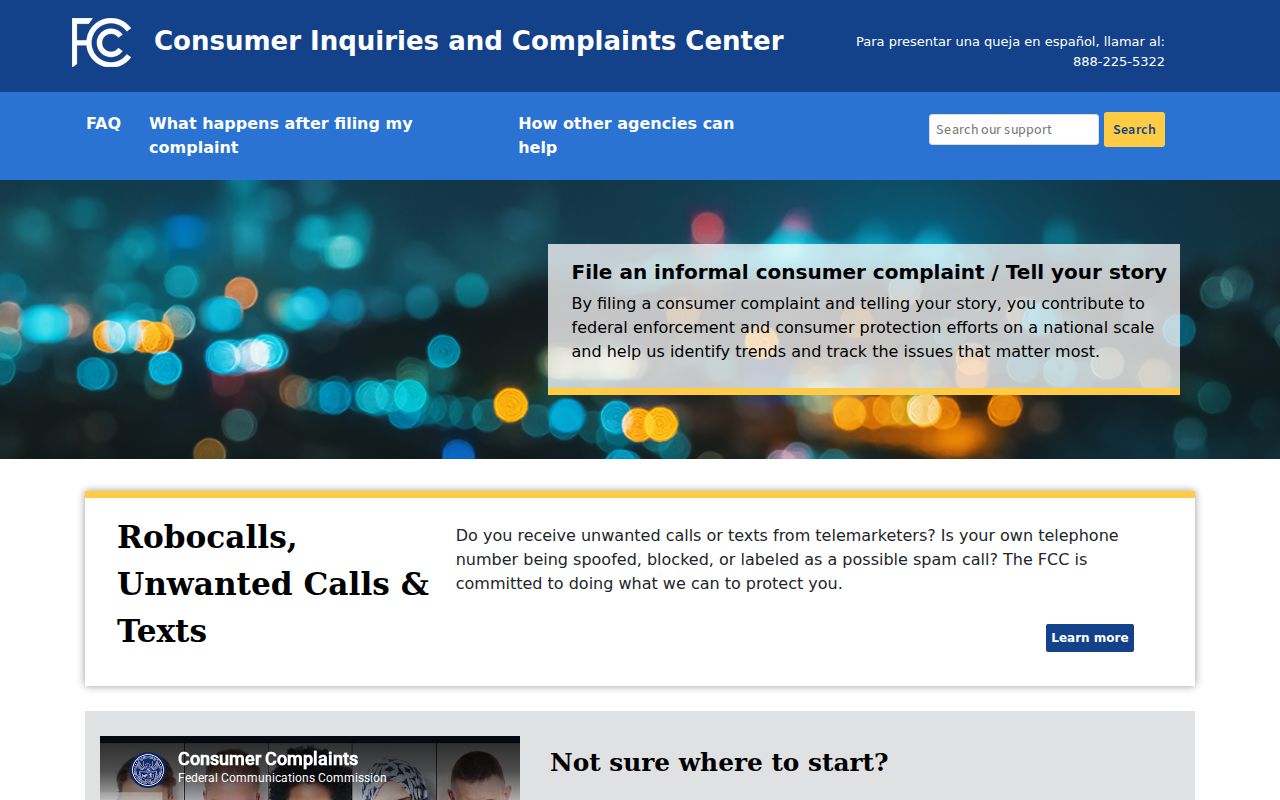
Filing there takes minutes, and complaint categories cover billing, porting, spoofing, and robocalls. A methodical check runs like this.
- Save the number, the date and time, and any voicemail before it disappears from your call log.
- Confirm the area code is real. Arizona's codes are covered on the Arizona phone area codes page, and NANPA verifies any other code.
- If the caller claimed to be a government office, school, utility, or court, look the office up in its official directory and call that published number back instead.
- Check whether the number was recently reassigned through the FCC's Reassigned Numbers Database, which reports disconnect-and-reassign status rather than names.
- Report violations to the FCC, and file consumer fraud with the Arizona Attorney General at 602-542-5763 or 800-352-8431 outside metro Phoenix.
Third-Party Reverse-Lookup Tools
These services are private companies, not government sources, and their results are unverified. Used with that caution, they add something the official channels do not: possible names, carrier data, and spam reputation built from user reports. A free basic search at NumLookup is the usual starting point.
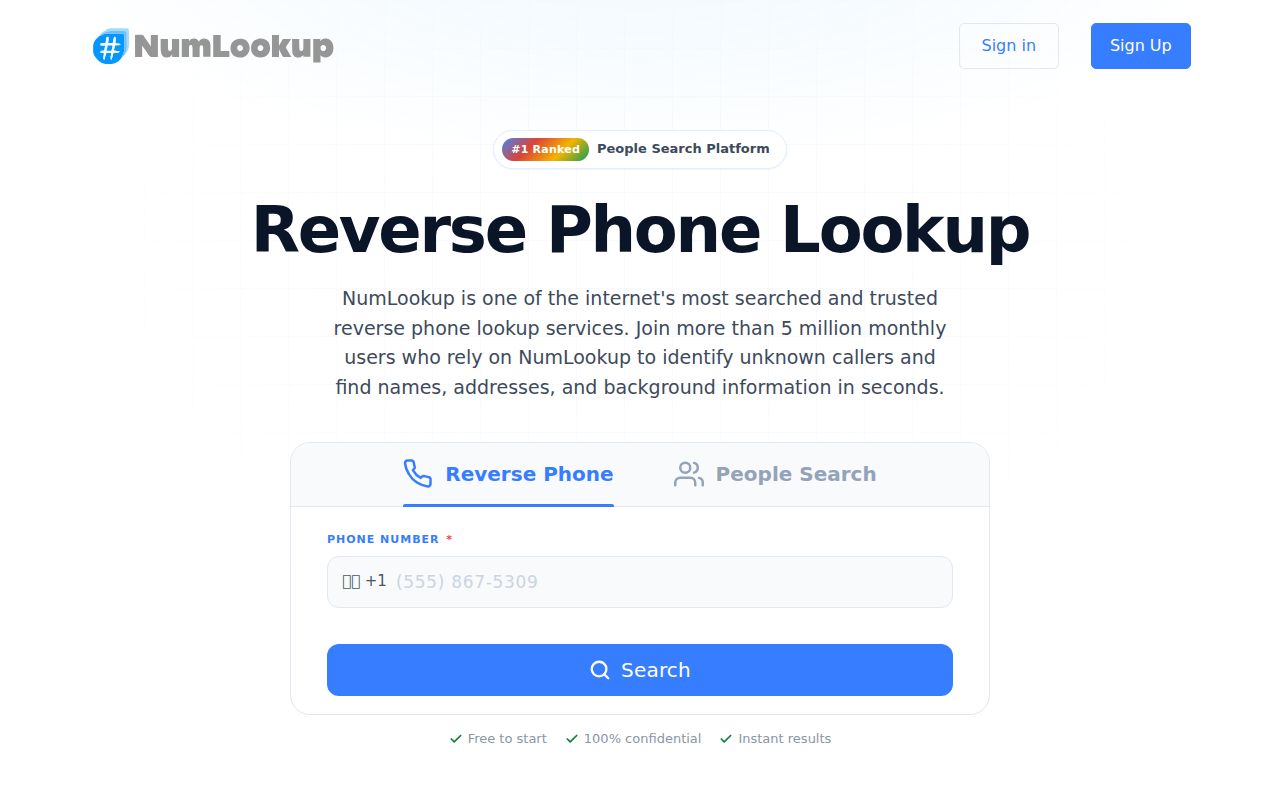
NumLookup returns a possible owner name plus carrier and line type on many queries, holding deeper detail for paid reports. The other established tools split by specialty.
| Tool | Free? | Returns Name | Returns Carrier | Returns Line Type |
|---|---|---|---|---|
| NumLookup | Free basic | Often | Yes | Yes |
| Truecaller | Freemium | Community-reported | Varies | Spam signals |
| RoboKiller Lookup | Free lookup | Spam identity | Limited | Spam risk |
| YouMail Directory | Free | Known callers | Limited | Robocall history |
| Hiya | App-based | Caller ID | Business focus | Spam risk |
| Whitepages Reverse Phone | Freemium | Often paid | Limited | Some |
For suspected scams specifically, RoboKiller's lookup reports what its filtering network has seen from a number.
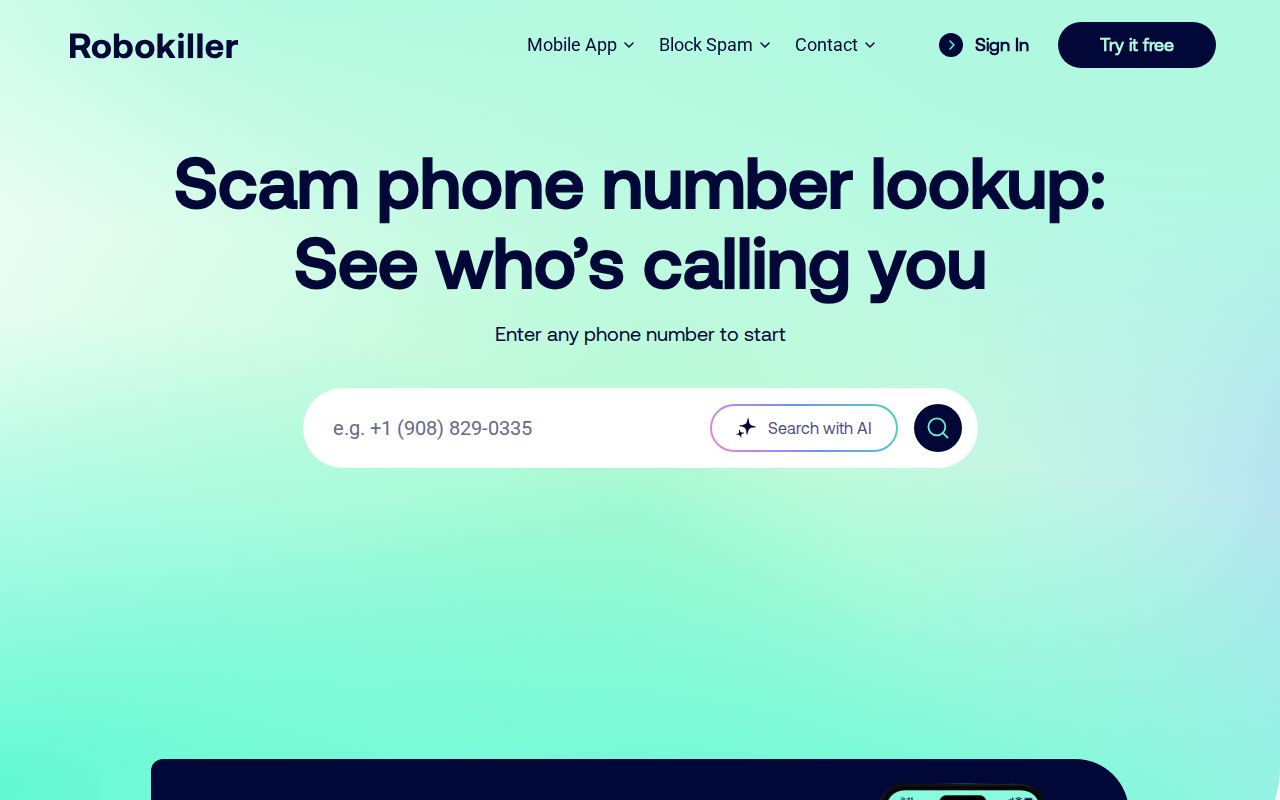
A number flagged heavily there has usually been robocalling at scale, which settles the question faster than any name search would.
Line Type and Carrier Checks
Whether a number is landline, wireless, or VoIP changes what it can do and how much trust it deserves. Landlines cannot receive texts. Wireless numbers move between carriers and cities without changing digits. VoIP numbers are legitimate for thousands of Arizona businesses, but they are also the cheapest kind for a scammer to grab and drop. Because of number portability, a prefix lookup shows a number's original assignment, not necessarily who carries it today.
| Line Type | Typical Use | Common Carriers in Arizona |
|---|---|---|
| Landline | Homes, offices, government lines | CenturyLink/Lumen lineage, rural ILECs |
| Wireless | Personal mobile numbers | Verizon, AT&T, T-Mobile, plus MVNOs like Cricket, Metro, and Mint |
| VoIP | Business lines, apps, virtual numbers | Cox, Comcast/Xfinity, Lumen, and national VoIP providers |
Reporting Robocalls and Scam Calls in Arizona
Reporting works on three tracks at once. Register your number and report telemarketing violations at the National Do Not Call Registry, which also takes reports by phone at 1-888-382-1222.

Registration is free and permanent for a personal line. The second track is the FCC's complaint center for robocalls and spoofing. The third is state-level: the Arizona Attorney General handles consumer fraud at 602-542-5763 in Phoenix, 520-628-6648 in Tucson, or 800-352-8431 elsewhere in state, and utility impostor cases can also involve the Corporation Commission once the real utility has been contacted. Carrier tools close the loop, with AT&T ActiveArmor, Verizon Call Filter, and T-Mobile Scam Shield all able to block and report from the handset.
Note: Complaints move faster with specifics, so capture the calling number, the date and time, and what was said before you file anywhere.
Community Helplines for Arizona
Dialing 211 anywhere in Arizona reaches 211 Arizona, the Solari-run referral network with live operators from 9 a.m. to 7 p.m. daily in English and Spanish, plus interpreter access for other languages. Its programs include housing crisis support, health coverage application help, a transportation hotline, and Spanish-language Promotores at option 2. From May through September, 211 also routes heat relief calls, an Arizona-specific service that points people to cooling resources during the hottest months. For road conditions, 511 covers live traffic, work zones, and border crossings statewide, and 811 schedules underground utility locates before any digging starts.