
The Five Arizona Area Codes
Arizona runs on five codes: 480, 520, 602, 623, and 928. The state started with just one. Code 602 arrived in 1947 under the original North American Numbering Plan and covered all of Arizona from Yuma to the Four Corners. Demand for numbers eventually broke that single code apart, first into a Phoenix code and a rest-of-state code, then into today's five. The Arizona Corporation Commission tracks the codes and their rules on its area code reference, and the current layout looks like this.
| Area Code | Coverage | Year Assigned | Overlay Status |
|---|---|---|---|
| 602 | Majority of Phoenix, plus parts of Glendale, Cave Creek, and Ahwatukee | 1947 | Phoenix overlay complex since 2023 |
| 480 | Chandler, Gilbert, Mesa, Tempe, Scottsdale, Sun Lakes, parts of Phoenix and Pinal County | 1999 | Phoenix overlay complex since 2023 |
| 623 | Glendale, Avondale, Tolleson, Buckeye, Sun City, New River, west and north metro | 1999 | Phoenix overlay complex since 2023 |
| 520 | Tucson, Casa Grande, Nogales, Bisbee, Sierra Vista, Douglas, surrounding communities | 1995 | Separate geographic code |
| 928 | Flagstaff, Prescott, Yuma, Kingman, Lake Havasu City, Bullhead City, Payson, Show Low, Winslow | After the 520 split | Separate geographic code |
The table's most important line is the overlay status. Any new Phoenix metro number can now carry 480, 602, or 623. Numbers in the south still mean 520, and numbers in the north and west still mean 928.
Which Code Covers Which Part of Arizona
Outside the Phoenix metro, geography still decides the code. The 520 region takes in Tucson and Arizona's southern tier, from Casa Grande down through Nogales, Sierra Vista, Bisbee, and Douglas. The 928 region wraps around the rest of Arizona: Flagstaff and the high country, Prescott, the Colorado River towns of Yuma, Kingman, Lake Havasu City, and Bullhead City, plus Payson, Show Low, Tuba City, and Winslow. A 928 number alone cannot tell you which of those towns it comes from, since the code spans hundreds of miles.
Inside the metro, the old labels are only history now. Before 2023, 480 meant the East Valley, 623 meant the West Valley, and 602 meant central Phoenix. Those assignments froze when the boundaries came down. Existing numbers kept their codes, so the old pattern still holds for older lines, but a number issued today follows no side of the valley. Matching a full number to its owner takes a directory search, and the Arizona phone numbers page covers those tools.
The cultural readings linger anyway. A 602 number still signals Phoenix history to most Arizonans. A 480 number still sounds like Mesa, Tempe, Scottsdale, or Chandler, and 623 still reads as Glendale and the west side. Those instincts are right often enough for older numbers and wrong often enough for new ones that they should never settle an argument on their own.
How the Phoenix Overlay Came About
Arizona has used both kinds of area code relief. The 1995 and 1999 changes were splits: a line was drawn, one side kept the old code, and the other side changed numbers. The 2023 change was different. Arizona regulators projected 480 would run out of numbers by early 2024 and 602 by 2026, while 623 had decades of supply left. Instead of adding a sixth code, the Arizona Corporation Commission approved a boundary elimination in Decision No. 78311. The walls between the three Phoenix codes came down, letting the whole rate center draw on the spare capacity of 623. Nobody changed numbers, and no new code was opened.
- Split
- A geographic line divides the region. One side keeps the old code, and the other side takes a new code and new numbers.
- Overlay
- An added code shares the same geography. Everyone keeps their number, and ten-digit dialing becomes mandatory.
- Boundary Elimination
- An overlay built from existing codes. The lines between neighboring codes are erased so they all serve the combined area.
- Permissive Dialing
- The transition window when both the old and new dialing patterns still connect, ending on a set cutover date.
The trade-off is the same one every overlay makes. Fewer forced number changes, but the code stops pointing at a specific place.
Ten-Digit Dialing Across Arizona
All five Arizona codes require ten-digit local dialing. The change came in two waves. Codes 480, 520, and 928 switched during the federal 988 rollout, because those codes contained working 988 prefixes that would have collided with the new crisis line. Codes 602 and 623 followed as part of the overlay: permissive dialing began February 11, 2023, and the mandatory rule took hold on August 12, 2023. Prices, coverage areas, and existing numbers did not change. Long-distance calls still take 1 plus the ten digits.
The 988 connection deserves a sentence of its own. When the FCC made 988 the national Suicide and Crisis Lifeline, a conflict surfaced. Any area code that still allowed seven-digit dialing while a 988 prefix was in service had to change. Otherwise, calls to the new lifeline would have been mistaken for local numbers. Three of Arizona's five codes fit that description, which is why most of the state made the switch before Phoenix did.
Important: Seven-digit local calls no longer connect anywhere in Arizona. Dial the area code plus the number for every local call, on every line type.
Three-digit services were not affected. Calls to 211, 511, 711, 811, 911, and 988 still work as short codes, and the full short-code list lives with the Arizona phone codes reference.
Arizona Area Code Timeline
Arizona's numbering history breaks into three eras: the single-code decades, the split years of the 1990s, and the overlay era that began with 988. Each step traces back to number exhaust, the point where a code runs low on unused prefixes and regulators have to act.
| Year | Event |
|---|---|
| 1947 | 602 assigned to all of Arizona in the original North American Numbering Plan |
| 1995 | 520 split off to serve Arizona outside metro Phoenix |
| 1999 | Phoenix rate center split three ways: 602 kept central Phoenix, 480 took the East Valley, 623 took the West Valley |
| 2021 | 988 implementation forced ten-digit local dialing in 480, 520, and 928; ACC Decision No. 78311 approved the Phoenix boundary-elimination plan |
| 2023 | Permissive ten-digit dialing for 602 and 623 began February 11; the mandatory rule took effect August 12 |
| 2025 | ACC reported the 520 exhaust forecast pushed back from early 2027 to mid 2030 |
| 2026 | NANPA forecast 520 exhaust at Q3 2031, 928 at Q3 2034, and the Phoenix complex at Q4 2056 |
The companies behind the wires have their own timeline. Arizona's legacy landline network passed from Mountain Bell to U S West, then to Qwest, and now sits with the CenturyLink and Lumen lineage. Rural incumbent carriers serve their own territories. The area codes outlived every one of those name changes.
Prefixes and Rate Centers Behind Arizona Codes
The three digits after the area code are the prefix, and prefixes belong to rate centers, the billing geography underneath the codes. A rate center decides what counts as a local call and which numbers can be assigned where. The Phoenix rate center is the reason the overlay works: one rate center, three codes, one shared pool of prefixes. In Arizona's 520 and 928 regions, a prefix can still hint at a town, since rate centers there map to places like Ajo, Benson, Bisbee, and Casa Grande.
NANPA publishes the mapping in its NPA rate-center report, which lists each rate center with its code, LATA, and pooling status.
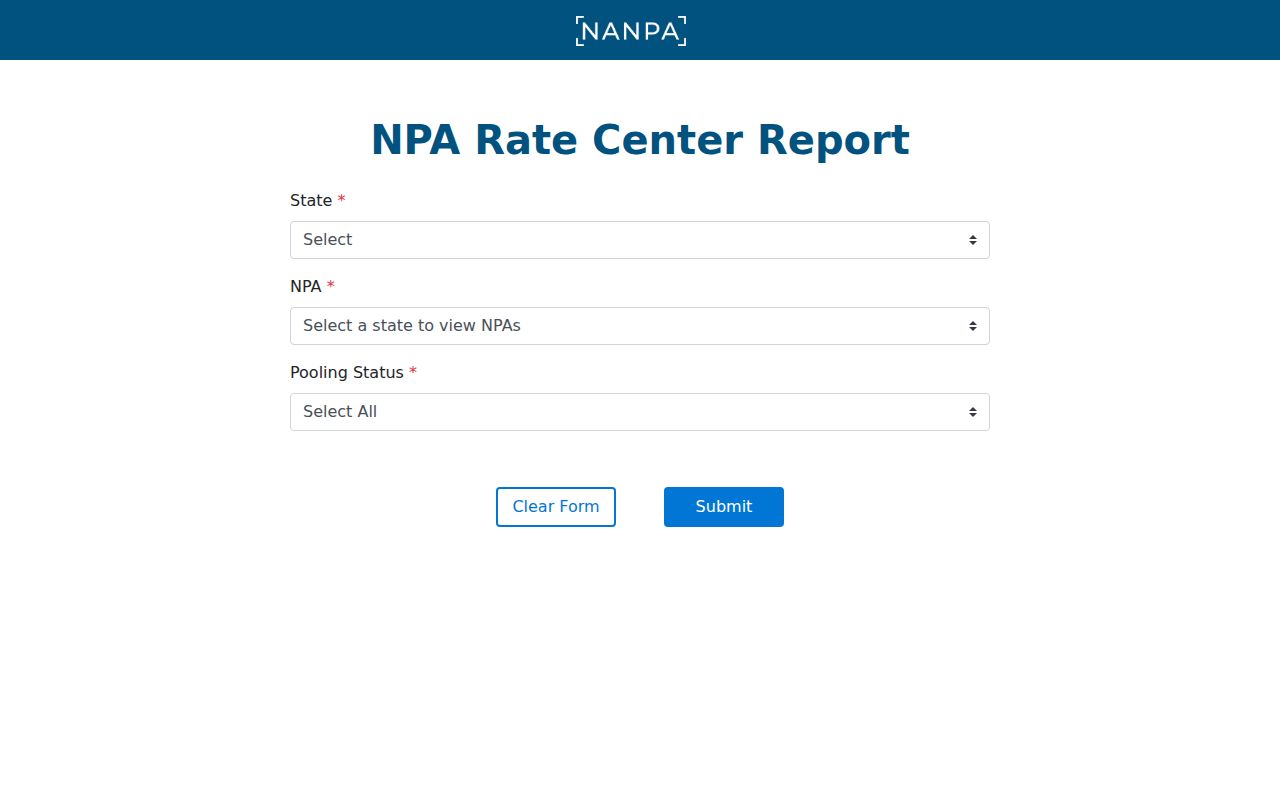
The report is the official answer when a prefix needs to be tied to its home rate center. Treat that answer as the original assignment only, because number portability lets a subscriber carry a number to a new carrier or a new town. Part of the reason 520 stopped racing toward exhaust sits in exactly this layer of the system. Conservation work on how number blocks get assigned recovered years of supply for southern Arizona, and no customer noticed a thing.
When Arizona Gets Another Area Code
Not soon. No new Arizona code is in service or on a rollout schedule. The nearest pressure point was 520, which once looked ready to exhaust by early 2027. Conservation work that began in late 2023 changed that. The Arizona Corporation Commission announced in December 2025 that the forecast had moved to the second quarter of 2030. NANPA's April 2026 analysis pushed it again, to the third quarter of 2031. The same analysis puts 928 at 2034 and gives the Phoenix overlay complex room until late 2056.
When relief does become necessary, NANPA proposes a plan and the Corporation Commission decides how Arizona adopts it, the same path the 2023 overlay followed. Relief plans are published as NANPA planning letters, searchable by state and year.
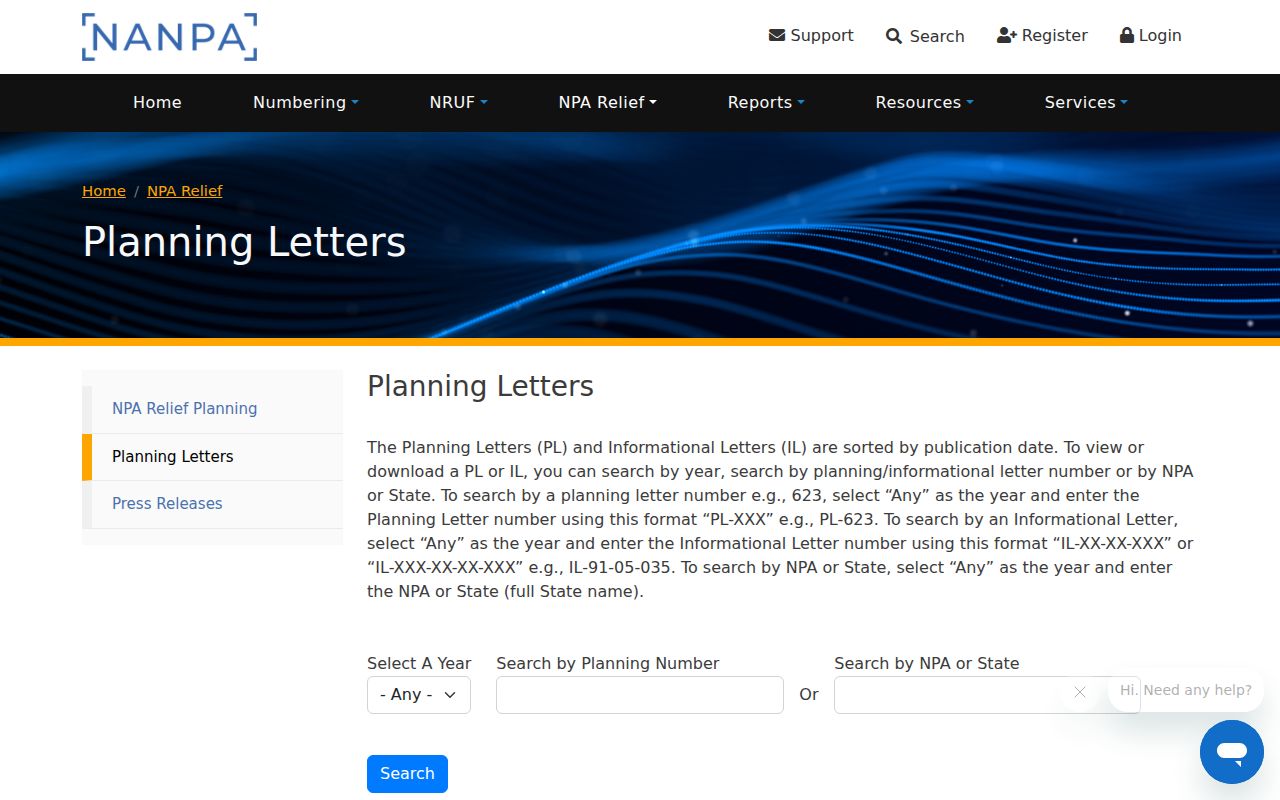
Those letters are where a future sixth Arizona code would first appear in writing, along with its dialing plan and cutover dates. For Arizona residents, an overlay-style plan would mean new numbers only, with every existing number untouched.
Note: Exhaust dates shift with carrier demand and number-block returns, so each yearly NANPA analysis can move an Arizona forecast by several years.
Confirming an Arizona Area Code
Scam callers like to invent area codes or borrow real ones from out of state. Checking takes under a minute. A legitimate Arizona number starts with 480, 520, 602, 623, or 928, and both federal numbering sources confirm what any code covers. The Corporation Commission's area code page is the state-level reference for coverage and dialing rules.
A code that checks out still says nothing about the caller. Spoofing puts real Arizona codes on fake calls every day, so the code is only the first test, never the last.